
Stucco is the skin of an Albuquerque house
Almost every home in Albuquerque wears stucco. It's in the Northeast Heights ranch homes built in the 1960s and 70s, the two-story houses on the Westside, the newer subdivisions in Rio Rancho and the older homes along the North Valley ditches. It's a great finish for this climate when it's healthy: it sheds rain, shrugs off the sun and keeps a house looking clean for decades.
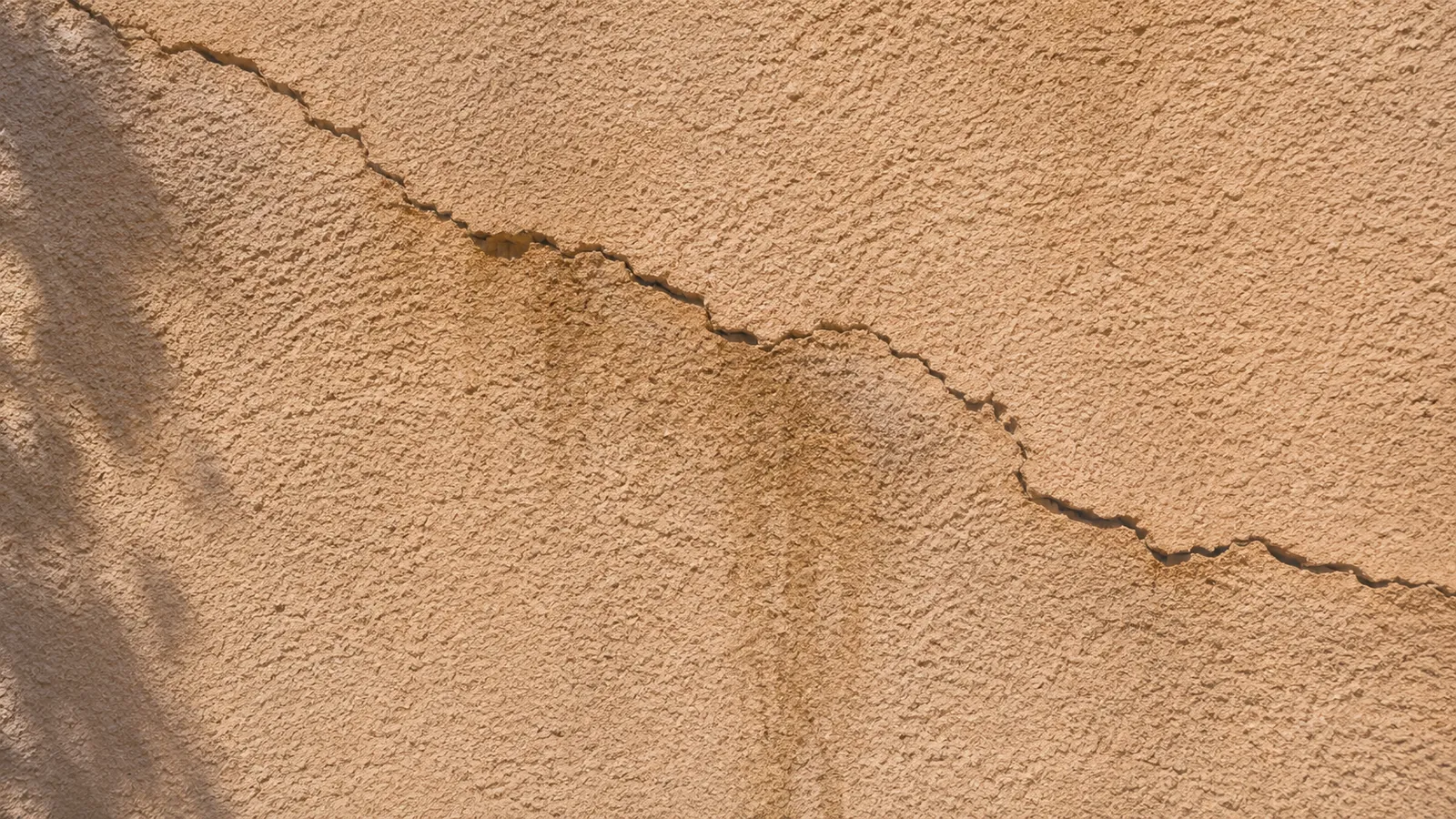
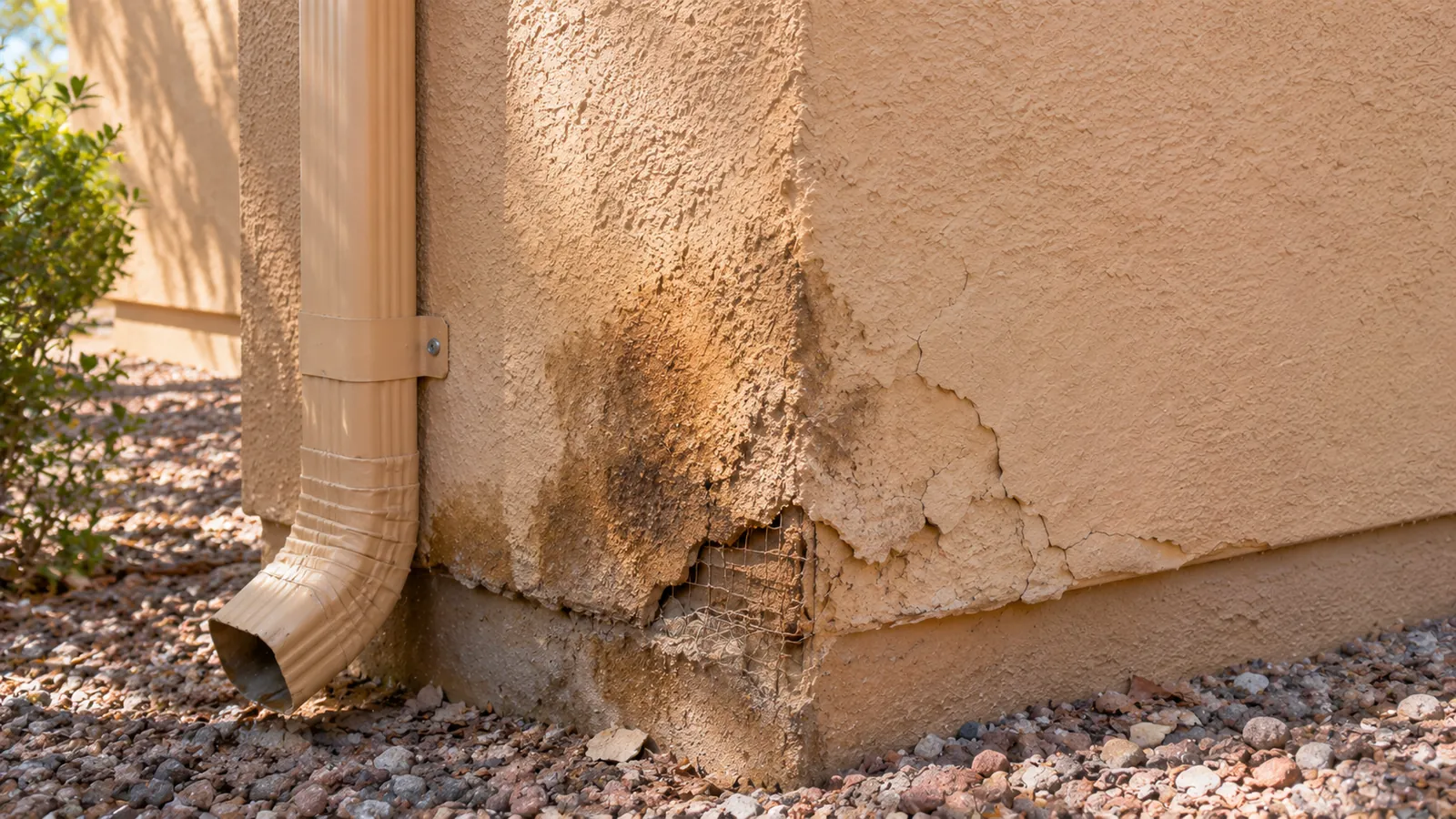
But stucco is also a thin skin over everything that matters. When it cracks, water finds its way behind it. When water sits behind it, the lath rusts, the paper breaks down, the framing or block underneath starts to suffer, and the stucco itself begins to let go. Most of the expensive stucco jobs we see started as small cracks that nobody sealed.
That's what we do: we find what's wrong with the wall, fix the cause, rebuild the stucco in the right layers, and finish it so you'd have a hard time pointing out where we worked.
What we fix
Why stucco fails in Albuquerque
Albuquerque sits more than a mile high in the high desert, and that combination is tough on any exterior finish. Here's what we see behind most of the calls we get.
Sun and temperature swings
A west-facing wall can go from freezing at dawn to baking by late afternoon. Stucco expands and contracts with every cycle. Over years, that movement opens hairline cracks at the weak spots: window and door corners, the tops of parapets, the joints between additions and the original house.
Monsoon rain
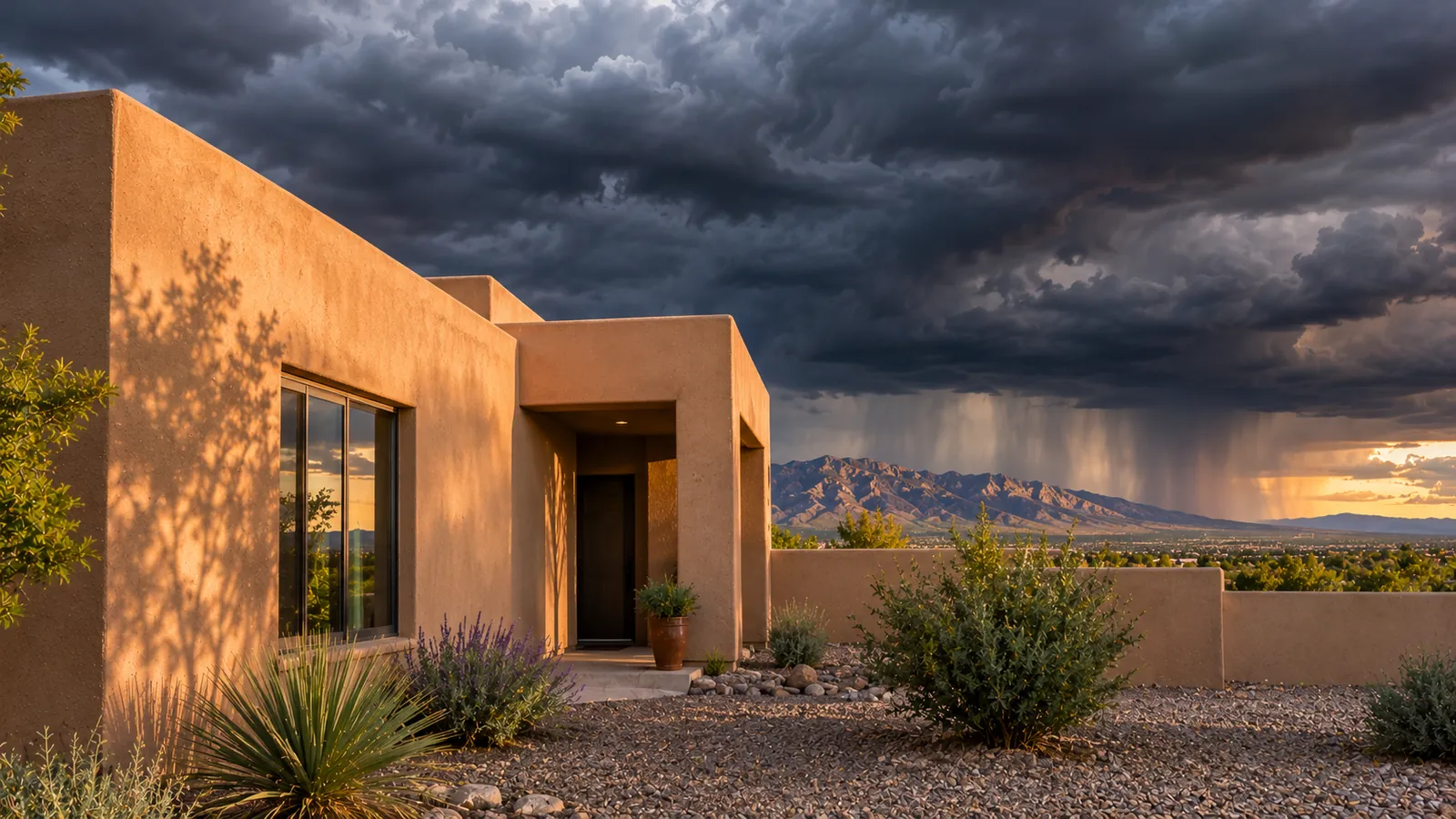
Most of the year the air is dry, then July through September brings sudden, heavy storms. Wind drives rain sideways into cracks that have been sitting open all spring. Water that gets behind the stucco has nowhere to go if the weep screed at the bottom of the wall is buried in dirt or gravel, so it sits and soaks.
Freeze and thaw
Winter nights regularly drop below freezing. Water trapped in a crack freezes, expands and pushes the crack wider. Spring is when a lot of homeowners notice that a crack they ignored last fall has suddenly grown.
Ground movement
Soils around the metro move as they get wet and dry out. Sprinklers, drip lines and planters against the house make it worse. When the ground under a footing shifts, stucco is the first thing to show it, usually as stair-step or diagonal cracks.
Flat roofs and parapets
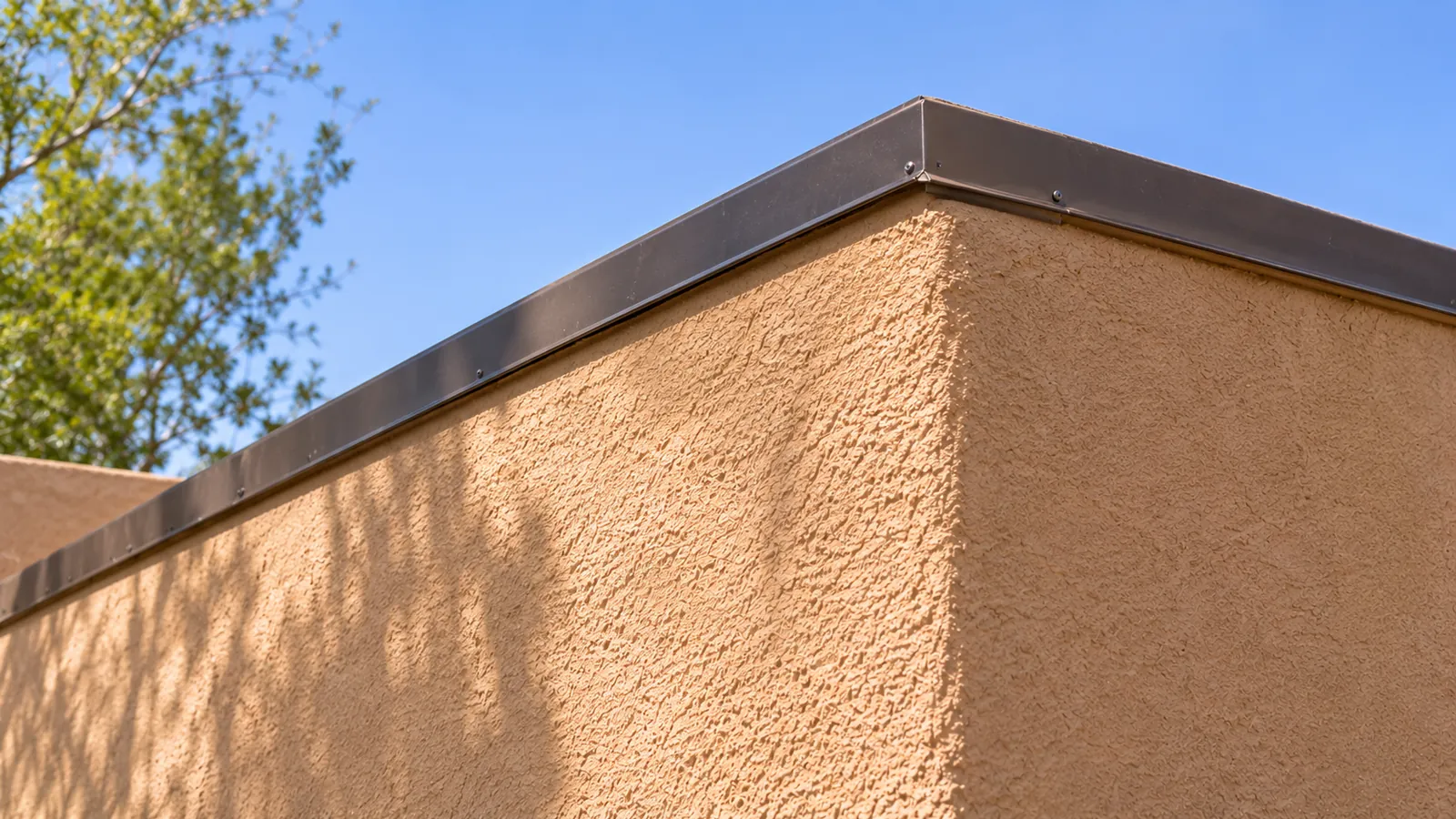
Thousands of Albuquerque homes have flat roofs with stucco parapet walls around them. The tops of those parapets take the full force of the weather, and when the cap cracks, water runs straight down inside the wall. We see more hidden water damage from parapet caps than from any other single source. See parapet and flat roof stucco repair.
Old patches and the wrong materials
A common problem is a repair done with the wrong product: a rigid cement patch on a synthetic wall, caulk smeared over a crack and painted, or a patch that was never color-coated and is now a different shade from the rest of the house. Bad patches crack around their edges and let water in. Part of our job is undoing them.
How we repair stucco, step by step
Good stucco repair isn't complicated, but it can't be rushed, and it has to be done in the right order. Here's what happens on a typical repair.
- We figure out what the wall is. Traditional three-coat cement stucco, one-coat stucco, a synthetic acrylic finish over cement, or true EIFS over foam board each need different materials. We check before we touch anything.
- We find the cause. A crack from a sprinkler soaking the foundation will come back if the sprinkler keeps soaking it. A stain under a window may mean the window flashing is the real problem. We tell you what we see.
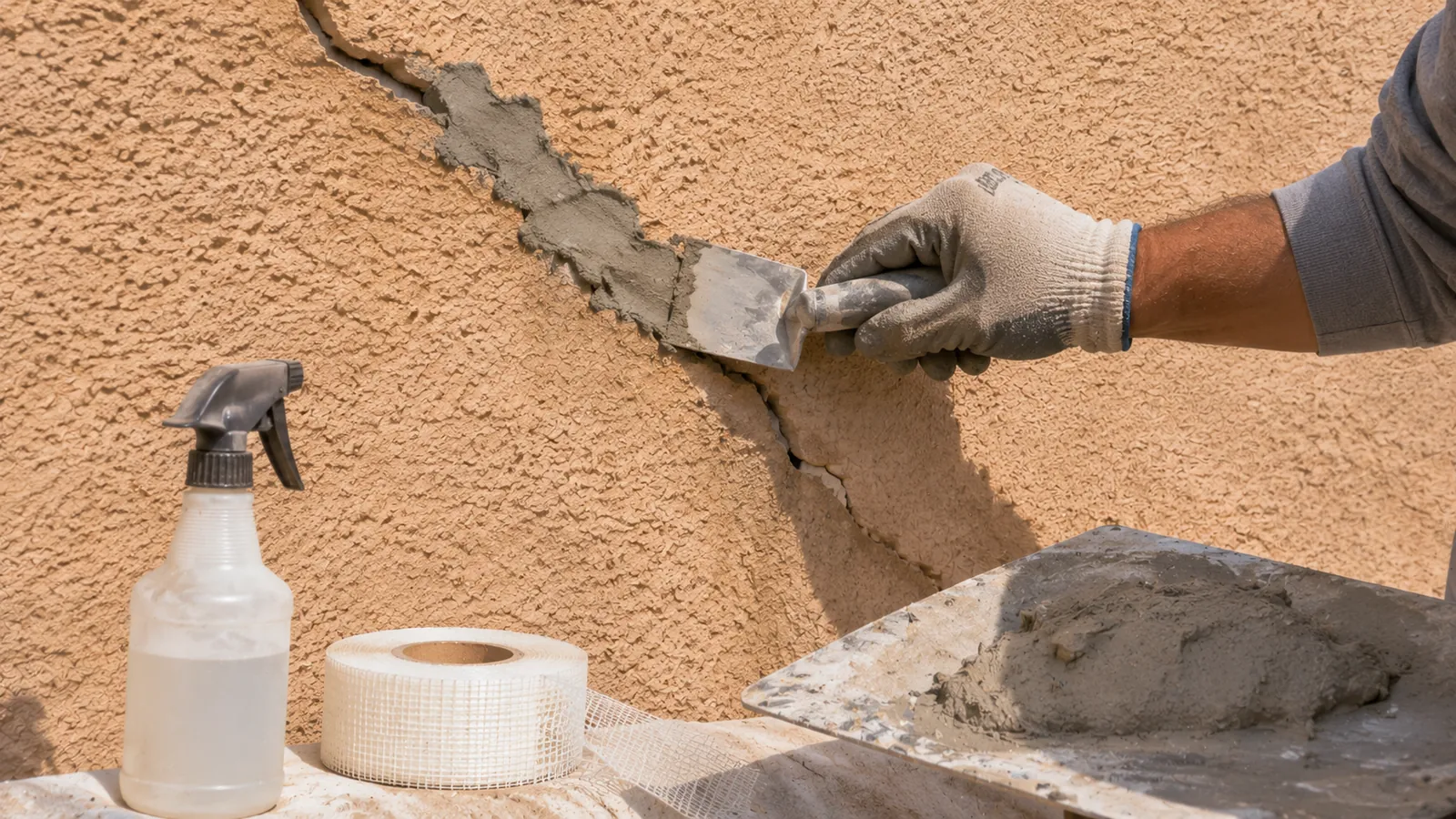
- We open it up only as far as needed. Loose and hollow-sounding stucco comes off until we reach solid, well-bonded material. If the paper or lath behind it is damaged, it gets replaced.
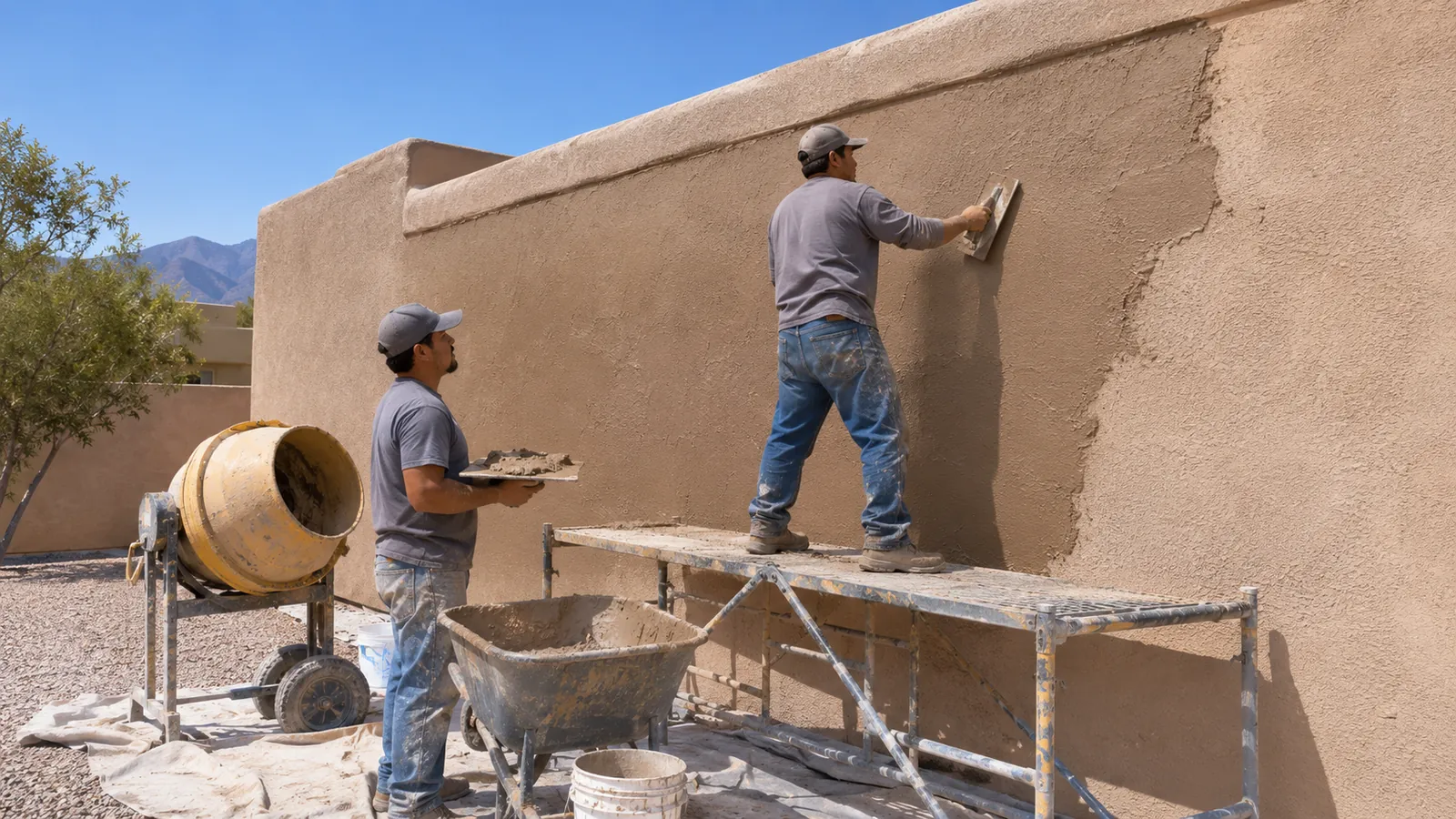
- We rebuild in layers. On cement stucco that means new paper and lath where needed, a scratch coat, a brown coat, and time to cure in between. Skipping cure time is the most common shortcut in this trade, and it's why so many patches crack around their edges.
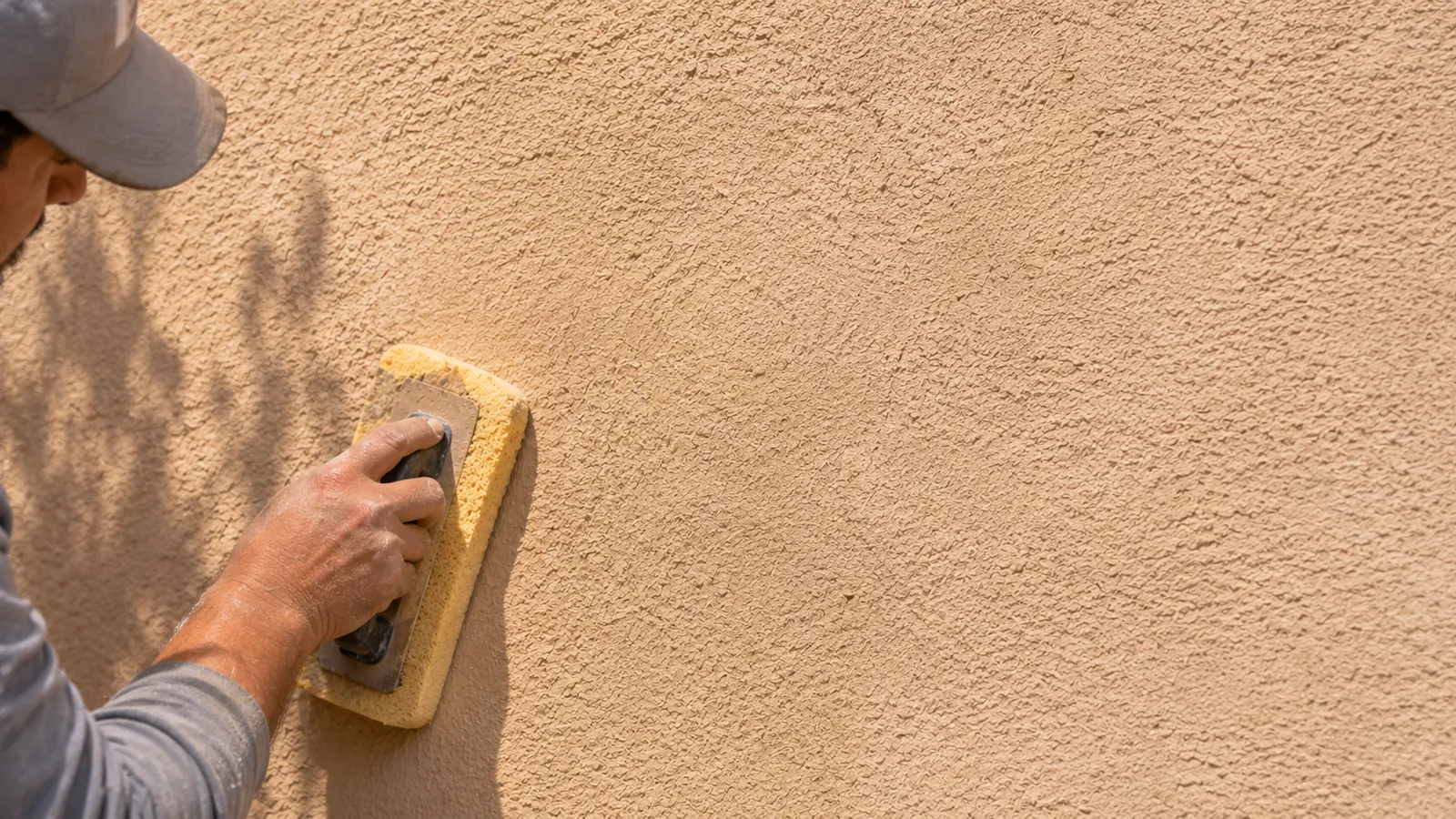
- We match the texture. Sand finish, light lace, heavy dash, smooth Santa Fe: we test on a small area first until it matches the wall around it.
- We finish the color. We blend the color coat to a natural break like a corner, a control joint or a change in plane, so the repair doesn't show up as a square on your wall.
- We clean up. Drop cloths go down before work starts, and the yard, windows and walkways are cleaned when we leave.
Repair, recoat or re-stucco?
Almost every homeowner asks this. The honest answer depends on what's going on behind the surface, not just on how the wall looks.
| Situation | Usually the right fix |
|---|---|
| A few hairline cracks, solid stucco, no water stains | Seal and patch the cracks, then color-coat the affected wall |
| Faded, chalky or blotchy color, stucco itself sound | A new color coat, or an elastomeric coating if there are lots of fine cracks |
| Wider or growing cracks, cracks from window corners | Cut out and rebuild the cracked area, find the cause, then color-coat |
| Hollow-sounding areas, bulges, stucco falling off | Remove the loose stucco, repair paper and lath, rebuild in layers |
| Staining, soft spots, damage at the base or below windows | Open the wall, check for water damage, repair the source, rebuild |
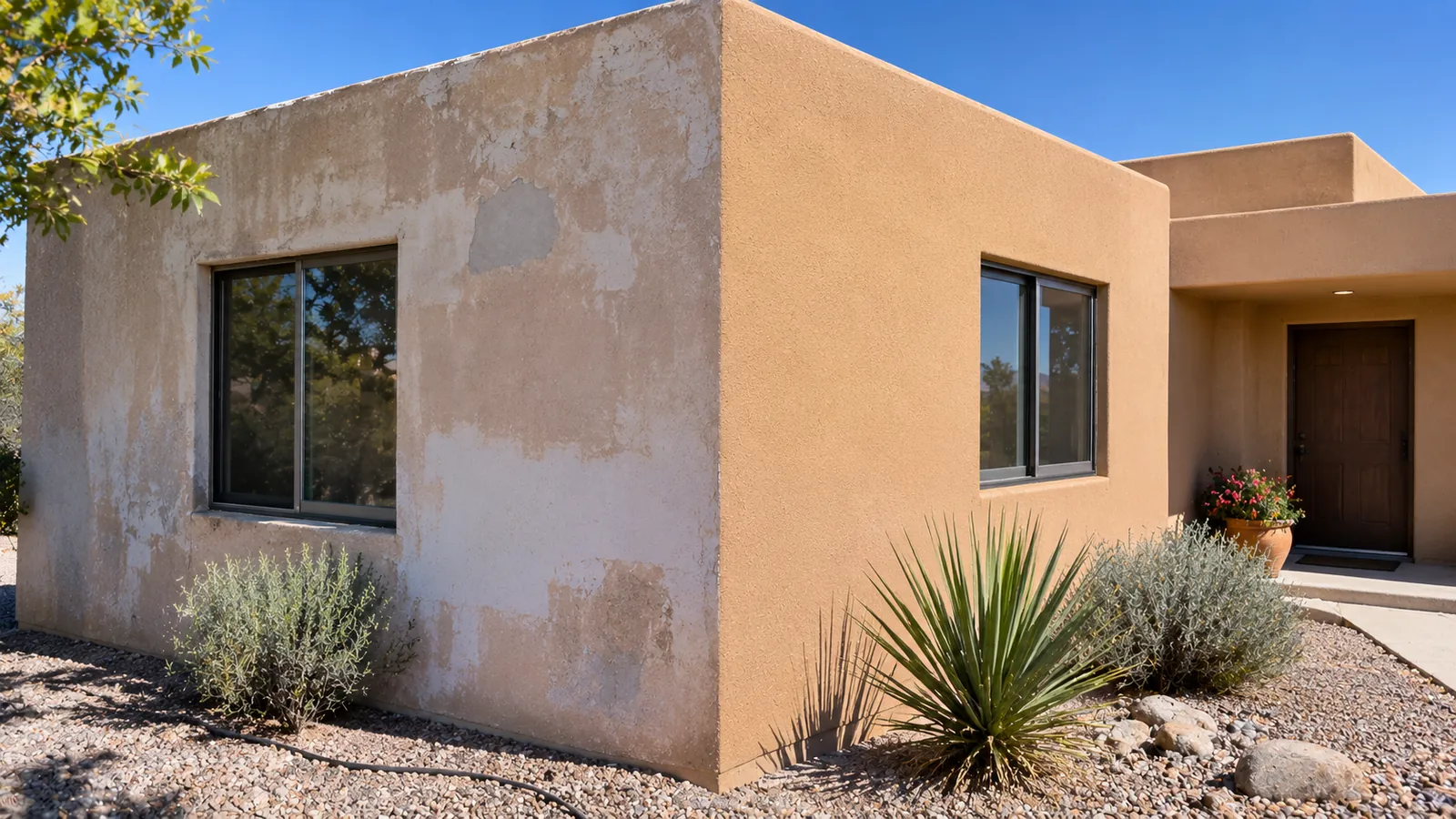
| Widespread delamination, years of mismatched patches | A full re-stucco of the wall or the house |
We'll always tell you which category your wall falls into and why. If a color coat will do, we won't sell you a re-stucco. If there's water damage behind a pretty surface, we'll show you before anything gets covered up. More detail on each option: re-stucco, color coat and elastomeric and crack repair.
Traditional, synthetic and EIFS: know what's on your house
Three kinds of stucco show up on Albuquerque homes, and repairing one with the materials of another is a mistake we're called to fix all the time.
- Traditional cement stucco is Portland cement, sand and lime applied over paper and metal lath (or directly on block). Older homes usually have three coats: scratch, brown and a colored finish coat. Many newer homes use a one-coat system with a finish on top. It's hard, durable and somewhat porous.
- Synthetic or acrylic finish is a flexible, colored acrylic coating applied over a cement base coat. It's common on homes built since the 1990s because it holds color well and resists hairline cracking. It's patched with compatible acrylic materials, not straight cement.
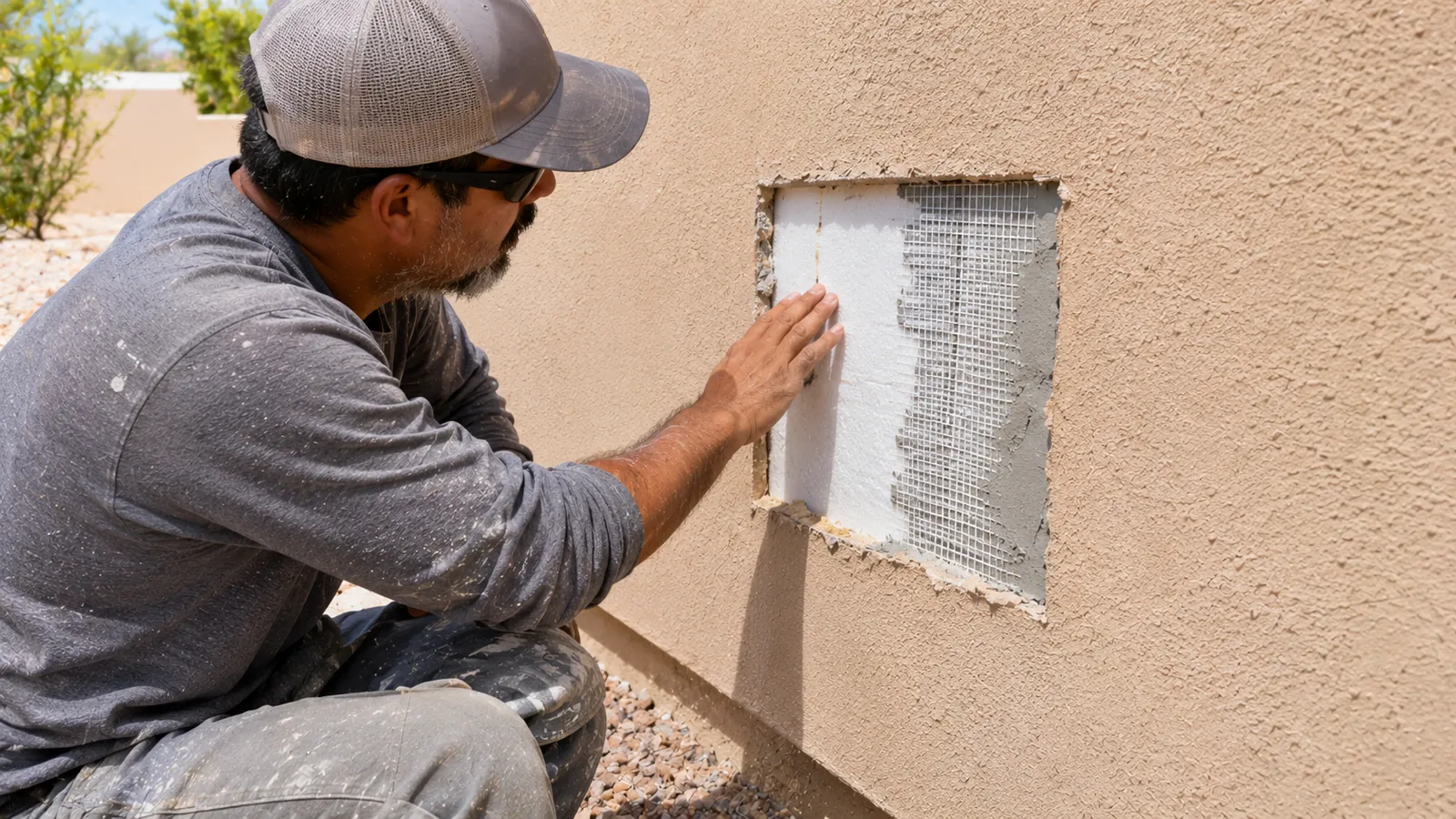
- EIFS (exterior insulation and finish system) has foam insulation board attached to the wall, a mesh-reinforced base coat, and an acrylic finish on top. It sounds hollow when you tap it. It needs EIFS-specific repairs, and water getting behind it is the main thing to watch.
Not sure which you have? We'll tell you when we come out. Our traditional vs. synthetic stucco guide explains the differences in more depth.
Matching color and texture
The difference between a repair you notice every time you pull into the driveway and one you forget about is the match. Stucco color fades unevenly: the south and west walls of an Albuquerque house can be several shades lighter than the north wall after ten years in the sun. A patch mixed to the original color will often look too dark.
So we match to the wall as it is today, not to a color name from the builder's paperwork. Texture gets the same treatment. We look at how the original was applied, whether it was troweled, floated, sprayed or dashed, and test until it blends. Where a perfect spot-match isn't possible, we carry the color coat out to the nearest corner or joint, so the eye reads it as one surface.
The parts of the wall people forget
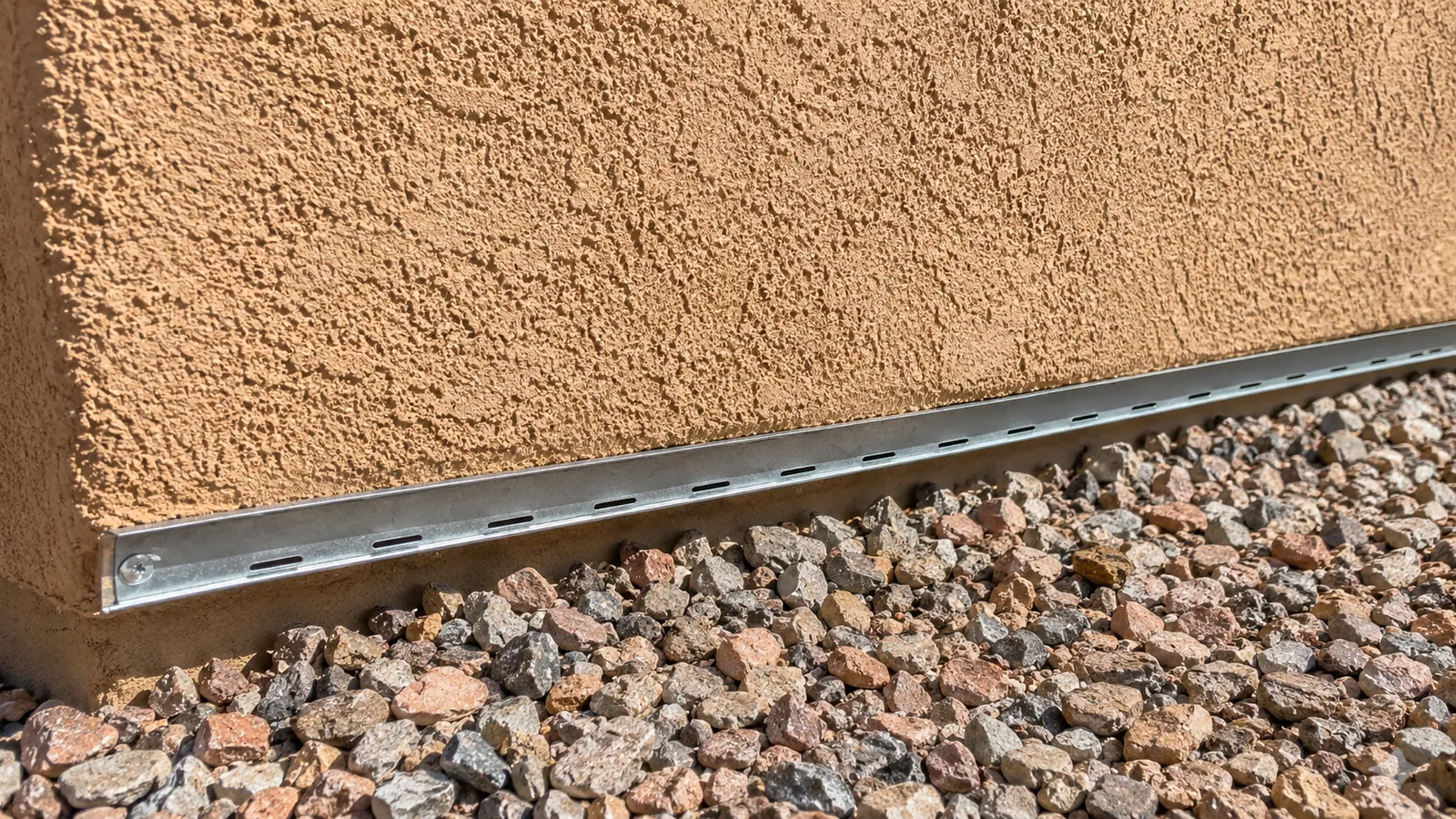
Weep screed
The metal strip at the bottom of a stucco wall on a framed house is there to let water out. When landscaping, gravel or soil gets piled up over it, water that gets behind the stucco can't drain. We find buried weep screeds all the time during repairs, along with rotted bottom plates behind them. If yours is buried, clearing it is one of the cheapest things you can do to protect the house.
Window and door edges
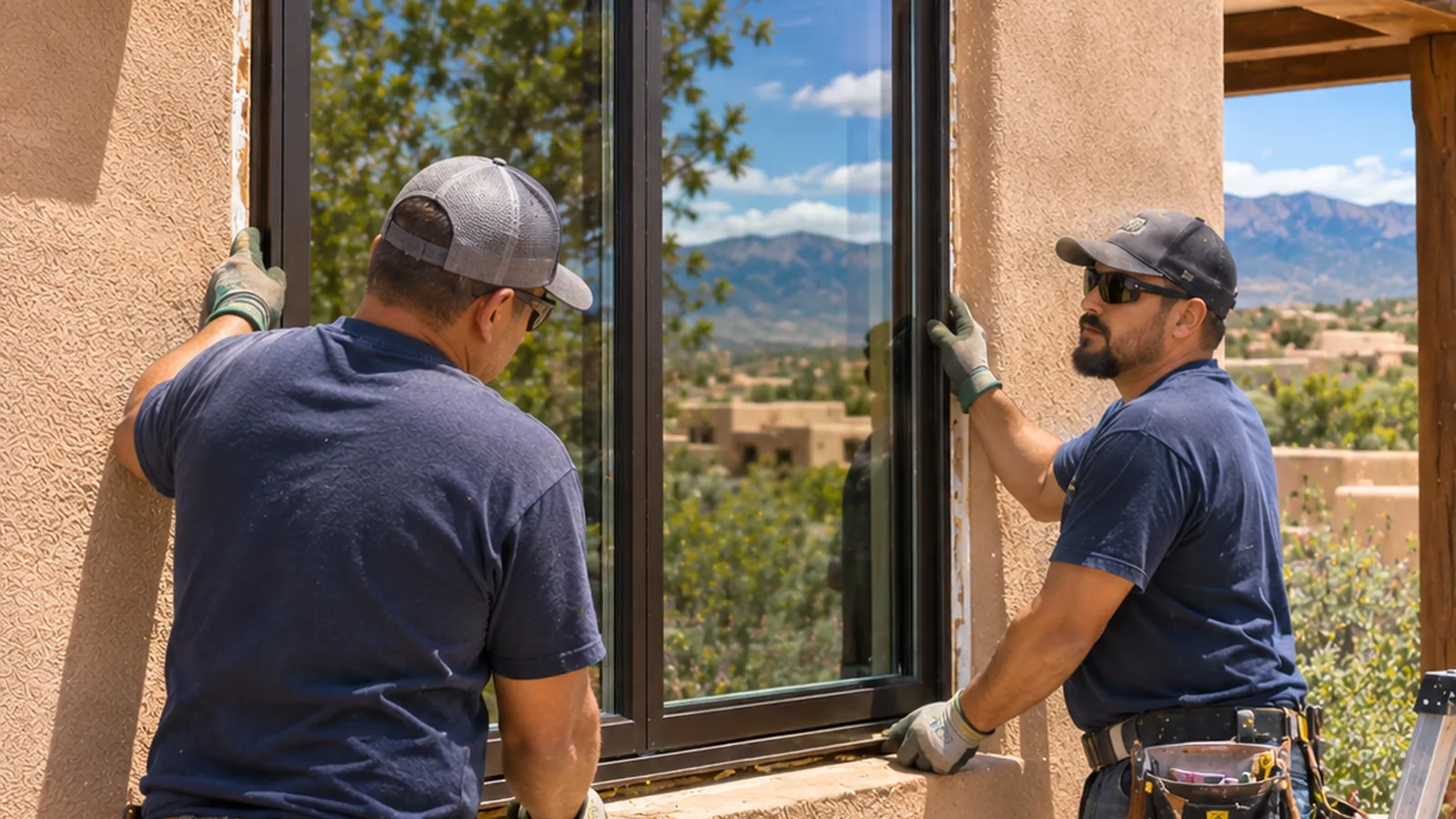
Diagonal cracks off window corners and stains below sills are often a window flashing problem, not only a stucco problem. When we see them, we look at the window too. If a window is being replaced, the stucco around it has to be cut back and patched properly, which is work we do every week.
Control joints and additions
Where a garage conversion, a casita or an addition meets the original house, the two structures move differently. If there's no joint to handle that movement, the stucco cracks along the seam. A proper repair often means adding a control joint rather than just patching the crack again.
Sprinklers and planters
Sprinkler heads that hit the wall and planters built against the stucco keep the base of the wall wet. That's how we end up replacing stucco, lath and sometimes framing at the bottom of a wall. We'll point it out if we see it.
Signs your stucco needs attention
- Cracks you can fit a credit card into, or cracks that have grown since last year
- Diagonal cracks running from window or door corners
- Dark streaks or stains below windows, at the base of walls or under parapets
- Stucco that sounds hollow when you tap it, or bulges outward
- Crumbling or missing stucco at the bottom of a wall
- Chalky color that rubs off on your hand
- Bubbling or peeling paint over stucco
- Interior signs: water spots on drywall along an exterior wall, musty smells, or peeling baseboard paint
If you're seeing any of these, it's worth a call. A small repair now is far cheaper than opening up a wall later. Our guide to stucco cracks explains which ones matter.
Color coats and elastomeric coatings
A lot of Albuquerque houses don't need new stucco at all. They need a new face. A fresh color coat over sound stucco evens out faded walls and old patches and makes a 30-year-old house look new again. Where a wall has a web of fine cracks, an elastomeric coating can bridge them with a thick, flexible film.
Elastomeric isn't right for every wall, though. On a wall that's already holding moisture, a heavy coating can trap it. We'll tell you which approach fits your house, and why. Details on our color coat page and in the elastomeric guide.
Water damage behind stucco
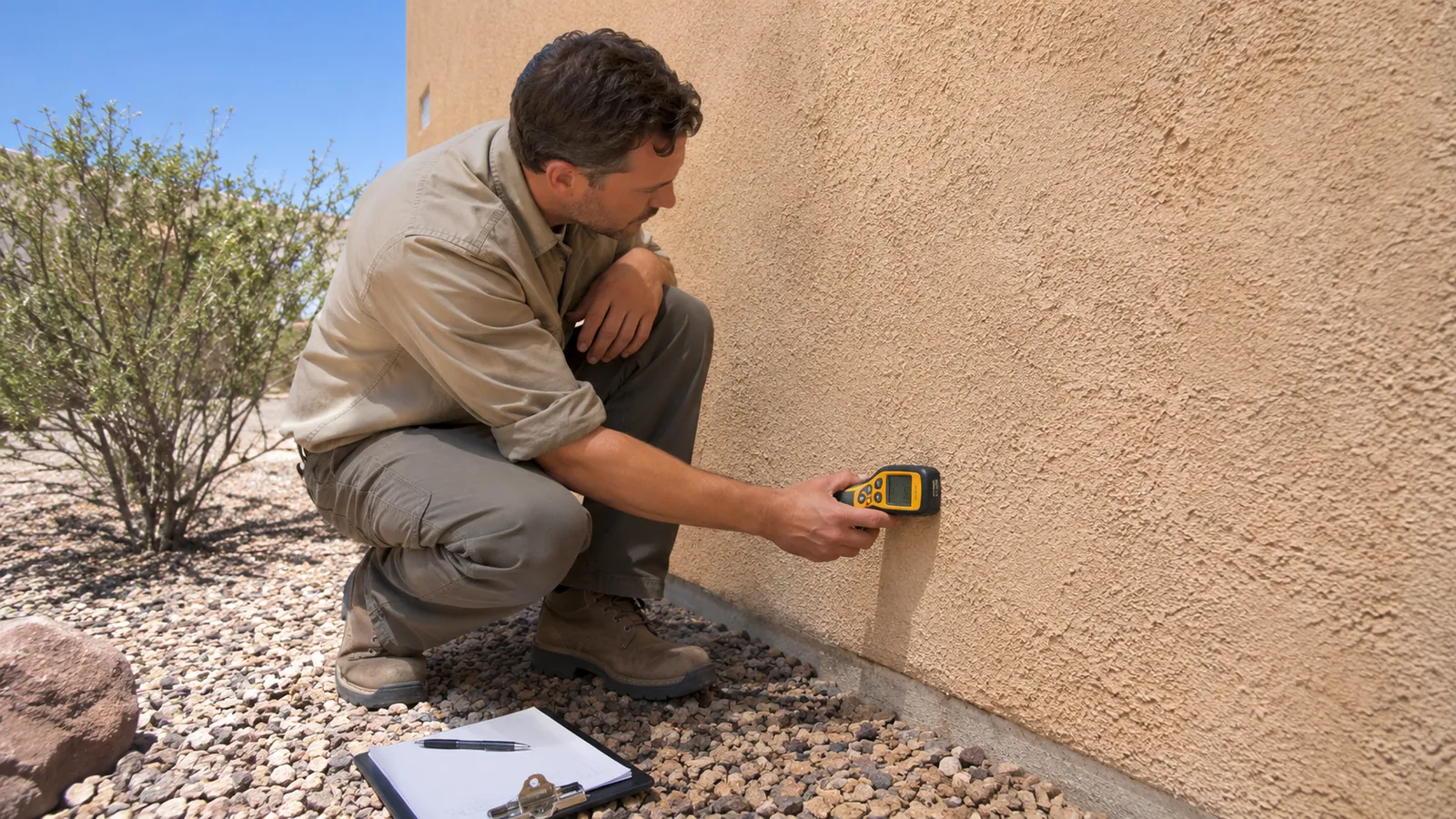
The most serious stucco problems are the ones you can't see. When water gets behind the stucco and stays there, it can rot sheathing and framing, rust lath, and grow mold, all while the surface looks mostly fine. Signs include stains that keep coming back, soft or crumbling stucco at the base of a wall, and moisture readings that are high in one spot and normal a few feet away.
When we suspect water damage, we open the wall in that area, show you what's there and fix the source before we rebuild. Covering wet, damaged material with fresh stucco just hides the problem for another couple of years. See stucco water damage and remediation and stucco inspections.
Where we work
We repair stucco across Albuquerque and the nearby towns, from the foothills to the West Mesa.



What to expect when you call
- A real conversation. Tell us what you're seeing. Photos help, and we can usually tell you over the phone whether it sounds cosmetic or serious.
- A look at the wall. We come out, tap and probe the stucco, check for moisture where it matters, and look at drainage, sprinklers, windows and the roof edge.
- A written price. You get the scope and price in writing, with what we're repairing and why. No surprises.
- Clean, careful work. We protect windows, plants and walkways, keep the job tidy and clean up every day.
- A finish you can live with. We walk the repair with you when it's done.
We're a call-only service: no online forms, no sales funnels. Call, describe the wall, and we'll set up a time to look at it. Call (505) 477-6886
Stucco guides
- Stucco Repair Cost in Albuquerque
- Stucco Cracks: Which Ones Matter?
- Traditional vs. Synthetic Stucco vs. EIFS
- Elastomeric Paint on Stucco: Pros and Cons
- Monsoon Stucco Checklist for Albuquerque Homes
Questions we hear
How much does stucco repair cost in Albuquerque?
It depends on the size of the damage, whether water got behind the wall, how many coats have to be rebuilt and how much of the wall needs a new color coat to match. A hairline crack fix costs a fraction of a full re-stucco. We look at the wall in person and give you a written price before any work starts. Our stucco repair cost guide explains what drives the number.
Can you match my existing stucco color and texture?
Usually, yes. We match the texture by hand on a test area and blend the color coat out to a natural break, like a corner or a control joint, so you don't end up with a visible square. On older, sun-faded walls, the cleanest result is often a new color coat on that whole wall.
Are hairline cracks in stucco a problem?
Most hairline cracks are cosmetic shrinkage or settling cracks. They're still worth sealing in New Mexico because monsoon rain and winter freeze-thaw will widen them. Cracks that are wider than a credit card, growing, stair-stepped or running from window corners need a closer look.
Do you repair synthetic stucco and EIFS?
Yes. Synthetic finishes and EIFS need different materials than traditional cement stucco, and patching one with the other is a common reason repairs fail. We identify what your wall is made of before we start. See synthetic stucco and EIFS repair.
How long does a stucco repair take?
A small crack or patch can be done in a day, with the color coat sometimes coming back a day or two later once the base has cured. A full re-stucco takes longer because each coat needs time to cure before the next goes on.
What time of year is best for stucco work in Albuquerque?
Spring and fall are ideal, but we work most of the year. In summer we schedule around the afternoon heat and monsoon storms, and in winter we avoid freezing nights while fresh stucco cures.
Do I need a whole new stucco job, or can it be patched?
Most homes only need targeted repairs and a fresh color coat. A full re-stucco makes sense when the stucco is delaminating over large areas, there's widespread water damage behind it, or the wall has been patched so many times that nothing matches.