Who calls us for an inspection
- Buyers who saw stucco cracks or stains in the listing photos or on a walkthrough
- Sellers who want to fix problems before an inspector flags them
- Homeowners who want to know whether they need a patch, a color coat or something bigger
- Owners of EIFS homes who want the joints and flashing checked
What we check
- Walk the exterior. Cracks, stains, bulges, hollow spots, old patches and coating failures on every wall.
- Risk areas. Window and door corners, parapet tops, roof-to-wall transitions, canales, the base of walls, around sprinklers and downspouts.
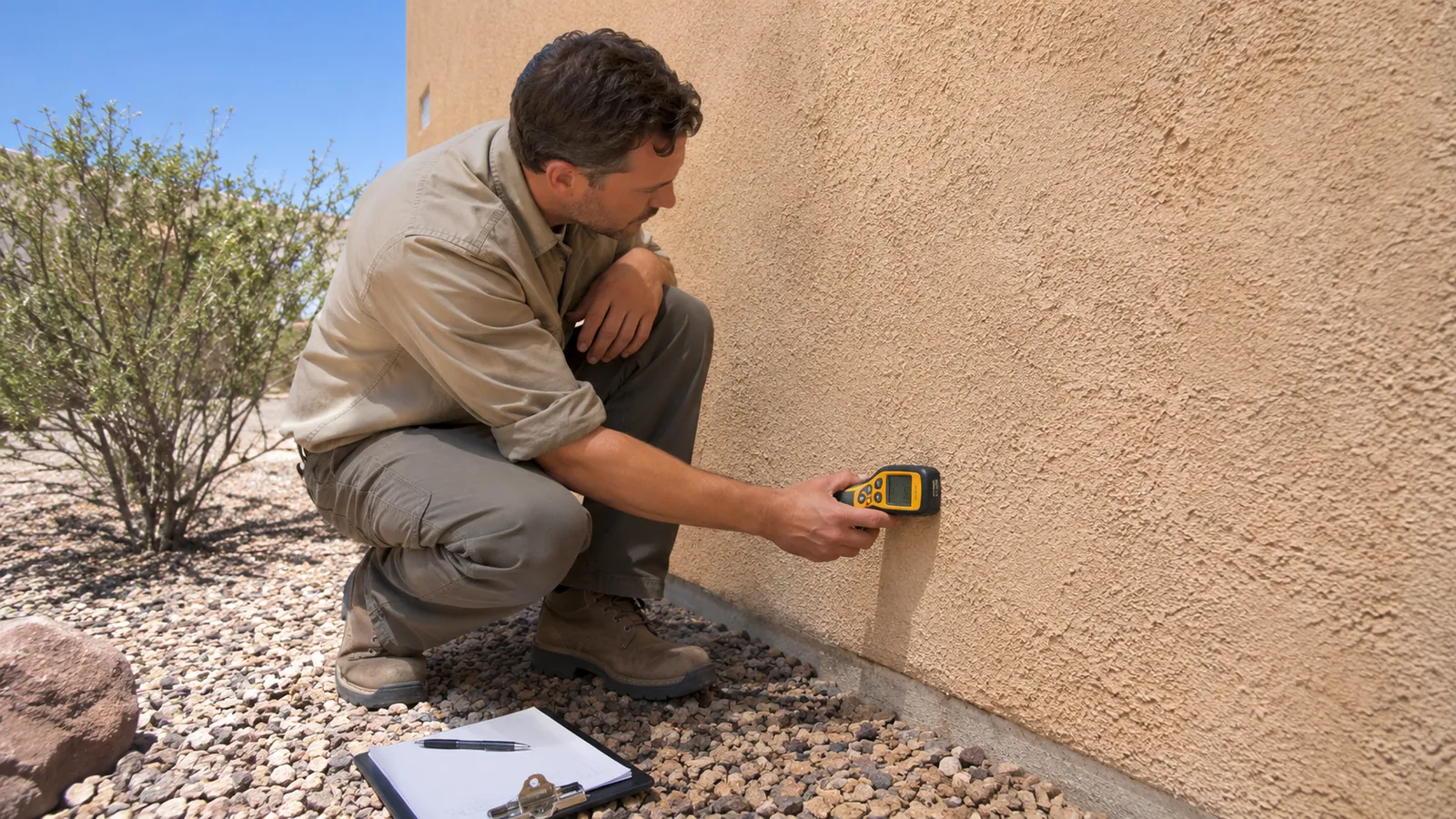
- Moisture readings. We take readings with a meter at the spots most likely to hold water and compare them to readings on dry areas of the same wall.
- Drainage. Whether weep screeds are clear, whether the ground slopes away, and whether irrigation is hitting the wall.
- Photos and summary. You get photos of what we found and a plain-English summary of what's cosmetic, what needs repair and what's urgent.
What a non-invasive check can and can't tell you
Moisture meters and a trained eye find a lot, but they can't see inside the wall. Where readings or signs point to trouble, the only way to know for sure is to open a small area. We'll recommend that only where it's warranted and patch it afterward.
If repairs are needed, the inspection turns into a written scope and price for the work. See water damage and remediation and stucco repair costs.
Questions we hear
Is a stucco inspection the same as a home inspection?
No. A general home inspector looks at the whole house. A stucco inspection focuses on the exterior walls, moisture risk areas and repair needs.
Do you drill holes?
Not by default. We start non-invasive and only recommend opening a small area if the signs point to hidden water.
How soon can you inspect before a closing?
Call us with your timeline and we'll do our best to fit it in.